If your dog finishes dinner in seconds and then looks at you for more, you are not alone. Many owners look for ways to slow mealtime down and give their dog something to do. Slow feeders and puzzle feeders do exactly that: they make your dog work a little for each bite. This guide explains how they work, how to choose between the main types, and how to introduce one safely.
- Why dogs eat so fast
- Slow feeder vs. puzzle feeder
- How to choose
- How to introduce a feeder
- Safety tips
- FAQ
Why dogs eat so fast
Dogs are natural scavengers, and gulping food quickly is common behaviour. Competition from other pets, excitement at mealtime or simple habit can all play a part. A regular bowl lets a dog empty it in moments, while a feeder that spreads out or releases the food turns the same meal into a short activity.
Slow feeder vs. puzzle feeder
The two terms overlap, but they usually describe different designs:
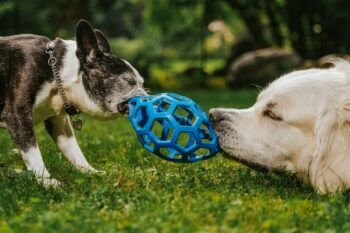
- Treat-dispensing toys release dry treats or kibble as your dog rolls or nudges them. They suit dogs that like to play with their food.
- Puzzle feeders hide food in compartments or channels that your dog has to explore to reach it. They suit curious dogs that enjoy figuring things out.
- Lick mats spread soft food over a textured surface, so the dog licks instead of gulping. They suit wet or soft food and calmer sessions.

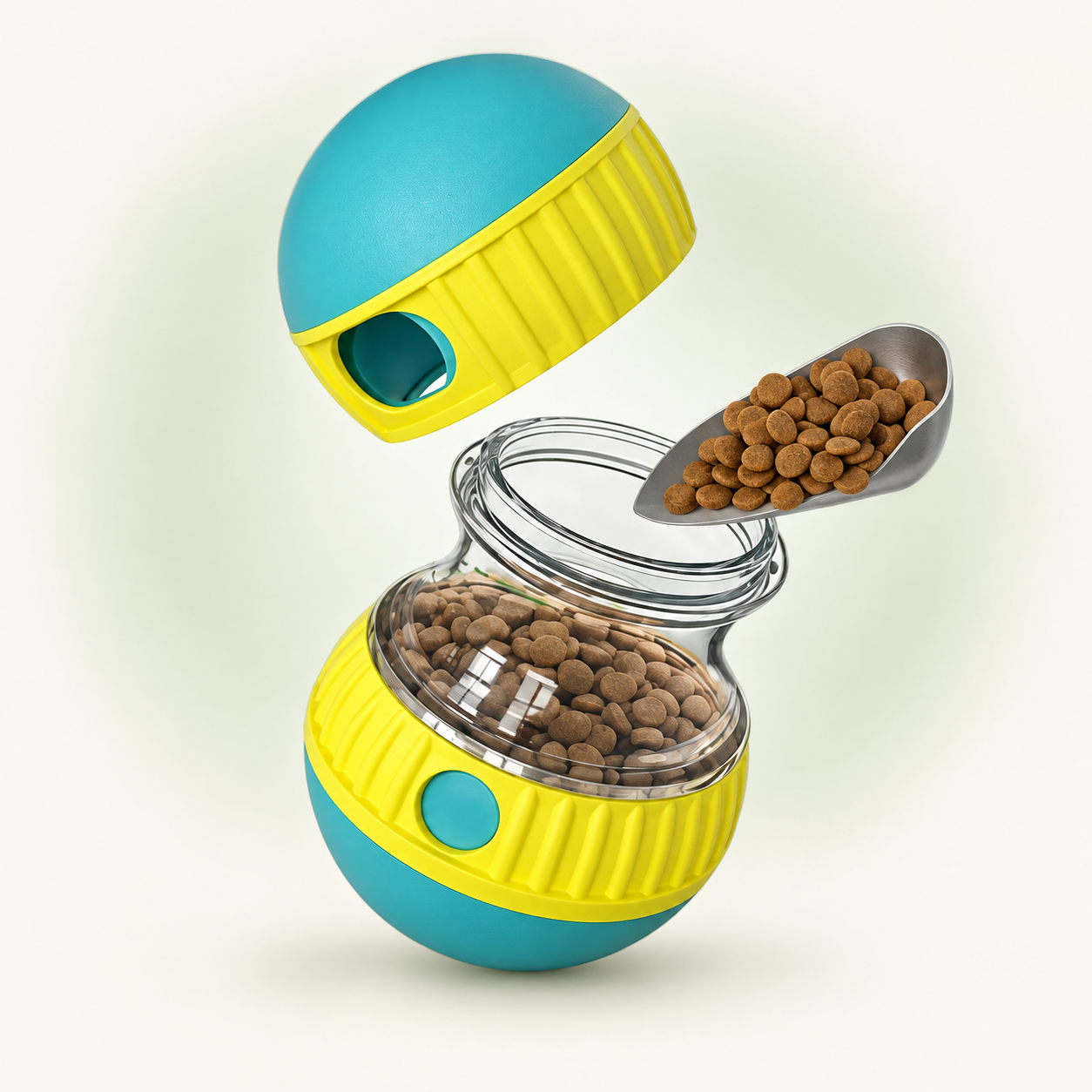
Our Interactive Slow Feeder Treat Dispenser for Dogs is a non-electric enrichment toy that dispenses dry treats or kibble as your dog interacts with it. It is made of durable plastic, suits small, medium and large dogs, and comes in blue-and-yellow and red-and-black.
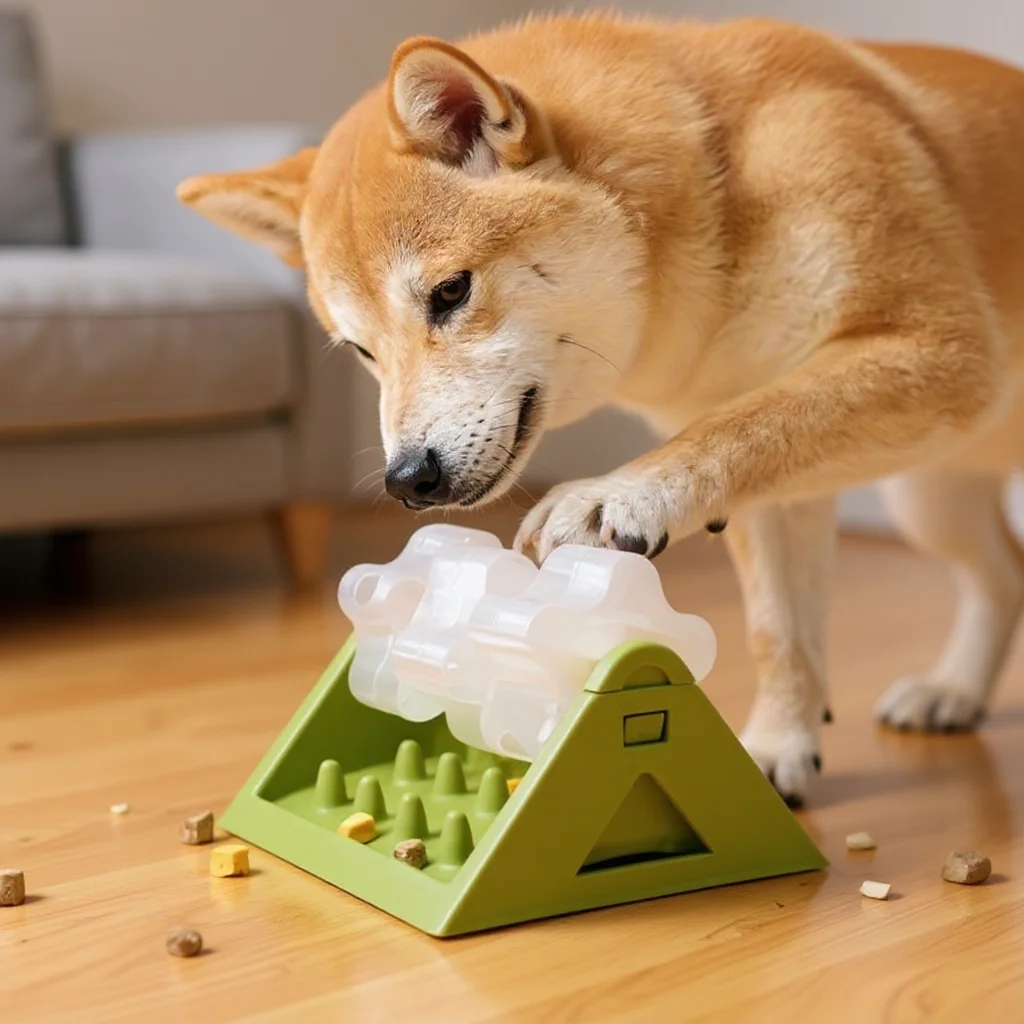
If you prefer a feeder that works as a puzzle, the Interactive Dog Puzzle Feeder and Treat Dispenser gives your dog a challenge to solve before the food comes out.
How to choose
- Food type: dry kibble and dry treats suit dispensing toys; soft or wet food suits a lick mat.
- Your dog’s style: energetic dogs often like rolling toys; thoughtful dogs often like puzzles.
- Size: choose a feeder that fits your dog’s muzzle and chewing strength, and pick treat or kibble pieces that dispense safely.
- Cleaning: pick something you can wash after every use.
- Durability: check regularly for cracks or damage, and replace a feeder that is broken.
How to introduce a feeder
- Start with a small, easy portion so your dog succeeds on the first try.
- Use a few treats your dog loves, not the whole meal, for the first sessions.
- Show your dog how it works, then let them explore at their own pace.
- Increase the difficulty gradually as your dog gets the hang of it.
- Stay close and watch the first few sessions.
Safety tips
- Supervise your dog, especially during initial use.
- Choose treat sizes that dispense safely and match your dog’s chewing habits.
- Use foods that are appropriate for your dog.
- Wash the feeder after use and replace it if it is damaged.
- Count the food in the feeder as part of the daily meal, so your dog does not get extra calories.
Products to try
Interactive Dog Puzzle Feeder and Treat Dispenser
Price range: $30.99 through $32.99 Select options This product has multiple variants. The options may be chosen on the product page
Interactive Slow Feeder Treat Dispenser for Dogs
Price range: $17.99 through $19.99 Select options This product has multiple variants. The options may be chosen on the product page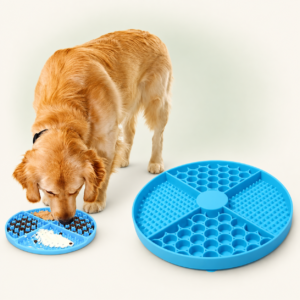
Silicone Lick Mat with Suction Cups for Dogs and Cats
Price range: $14.99 through $15.99 Select options This product has multiple variants. The options may be chosen on the product page
Frequently asked questions
Are slow feeders good for dogs that eat too fast?
They are designed to slow mealtime down by making your dog work for the food. If fast eating is causing vomiting or discomfort, ask your vet for advice.
Can I put my dog’s whole meal in a feeder?
Many owners do, once their dog is comfortable with it. Begin with small portions and build up, and make sure your dog still eats enough.
Do I need to supervise my dog with a feeder?
Yes, at least during the first sessions, so you can see how your dog uses it and that the treats dispense safely.
How do I clean a dog feeder?
Wash it after use, and check it regularly for damage. Follow the care instructions on the product page.
This guide is general information, not veterinary advice. If your dog eats very fast, vomits after meals, or has a health condition, talk to your vet before changing how you feed them.
Browse more dog feeding and watering supplies at Pawzis.